


Anglia Ruskin University – David Building
Anglia Ruskin University
The Opportunity
Anglia Ruskin University, with over 30,000 students, operates in the context of an increasingly competitive educational market and recognises the need to create an inspiring and modern environment that meets the requirements of academic disciplines on its campuses.
This project involved the retrofitting of teaching and office space in a 1960s building to create new laboratory facilities, with innovative solutions to get the most out of limited space to create 21st century flexible, multi-functional teaching laboratories for a variety of sciences.
Anglia Ruskin University commissioned Austin initially to produce a feasibility study and then to develop the full design for the new Multifunction Teaching Laboratory.
The Solution
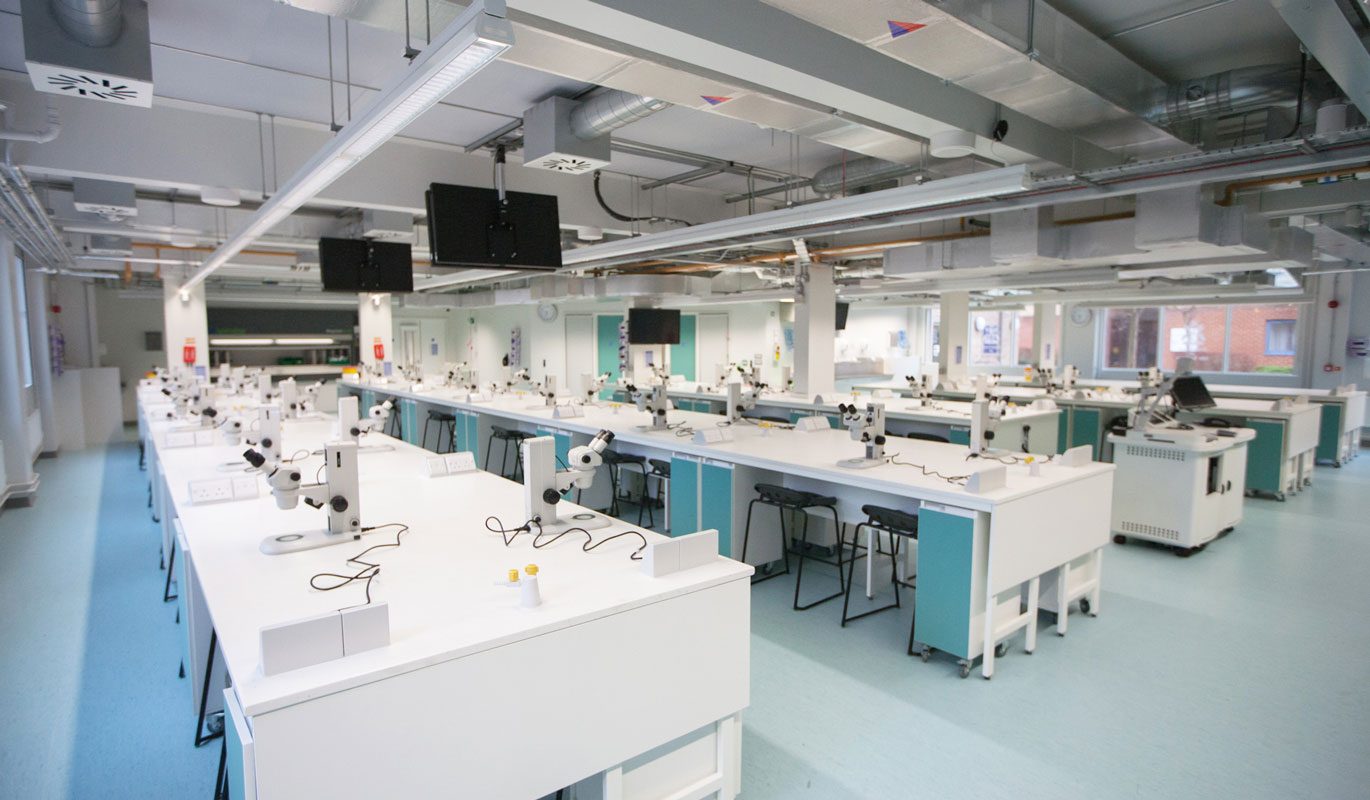
The design solution responded to the brief for the provision of a flexible multifunction life science teaching laboratory and support laboratory for a minimum of 80 students within the parameters of the existing life sciences building.
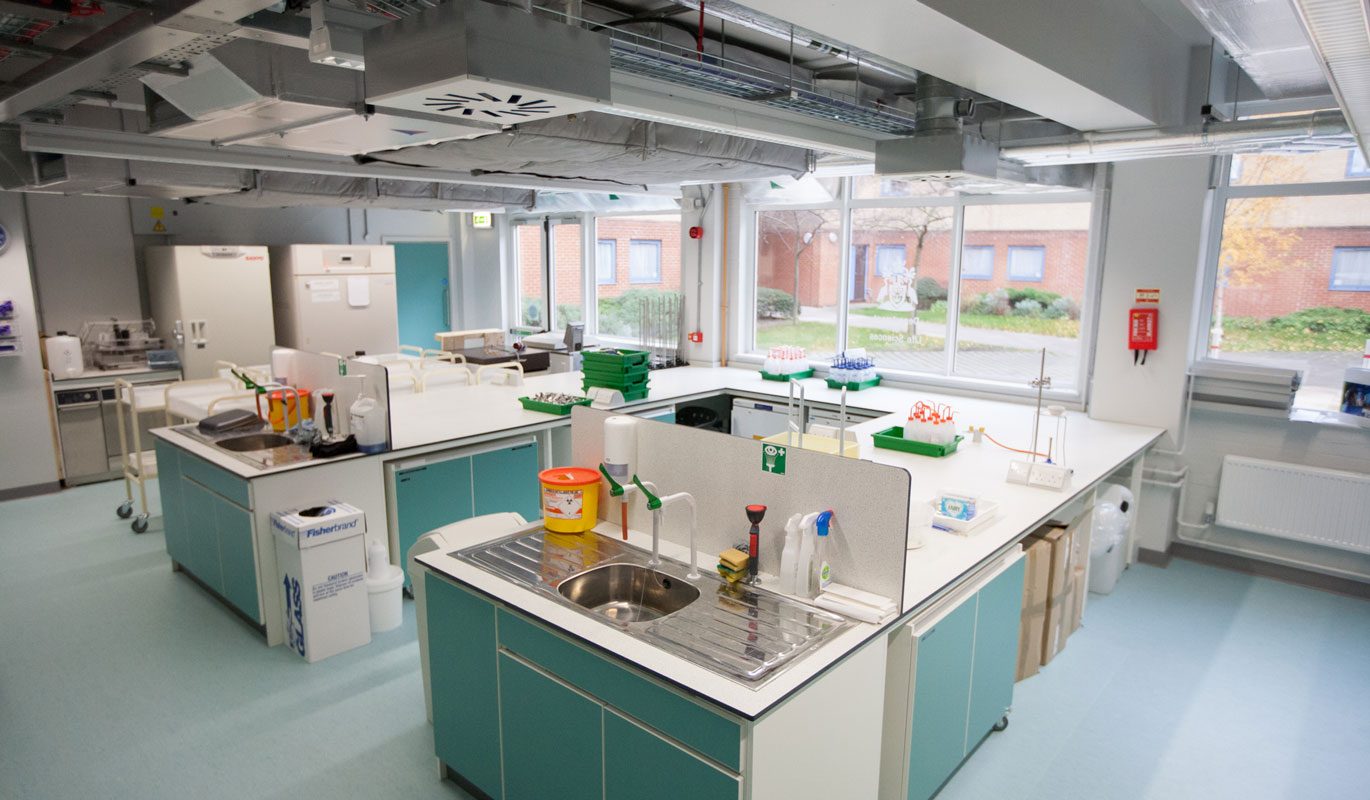
The design challenge was to incorporate a comfort cooled teaching laboratory within the constraints of a building that had limited infrastructure. Everything is stand alone fitting within the volume of the ground floor. Due to restricted space, fume cupboard extracts are taken directly outside the building running to exhaust at roof level.
A ceiling-free solution was adopted in order to benefit from the volume to the underside of existing soffit, which provided space at high level for ventilation plant and services distribution. The services have a high standard of finish as they are all exposed to view. To maximise the ingress of light, new windows were installed to further increase the daylight penetration and increase the sense of connection with the outside environment.
The Velstone bench top material tested by the users provides a large format seamless bench. This supports the multi-function science requirements. Power data and gas services provided are grouped on the bench for easy accessibility but configured to allow large uninterrupted bench areas for laying out large items including full size skeletons.
The project commenced in July 2012. A Two Stage D&B Tendering approach was chosen and programmed so that the project could complete in September 2013, including time for an End User fit-out phase to ensure teaching could commence in the laboratory in time for the start of the University’s Autumn Term.
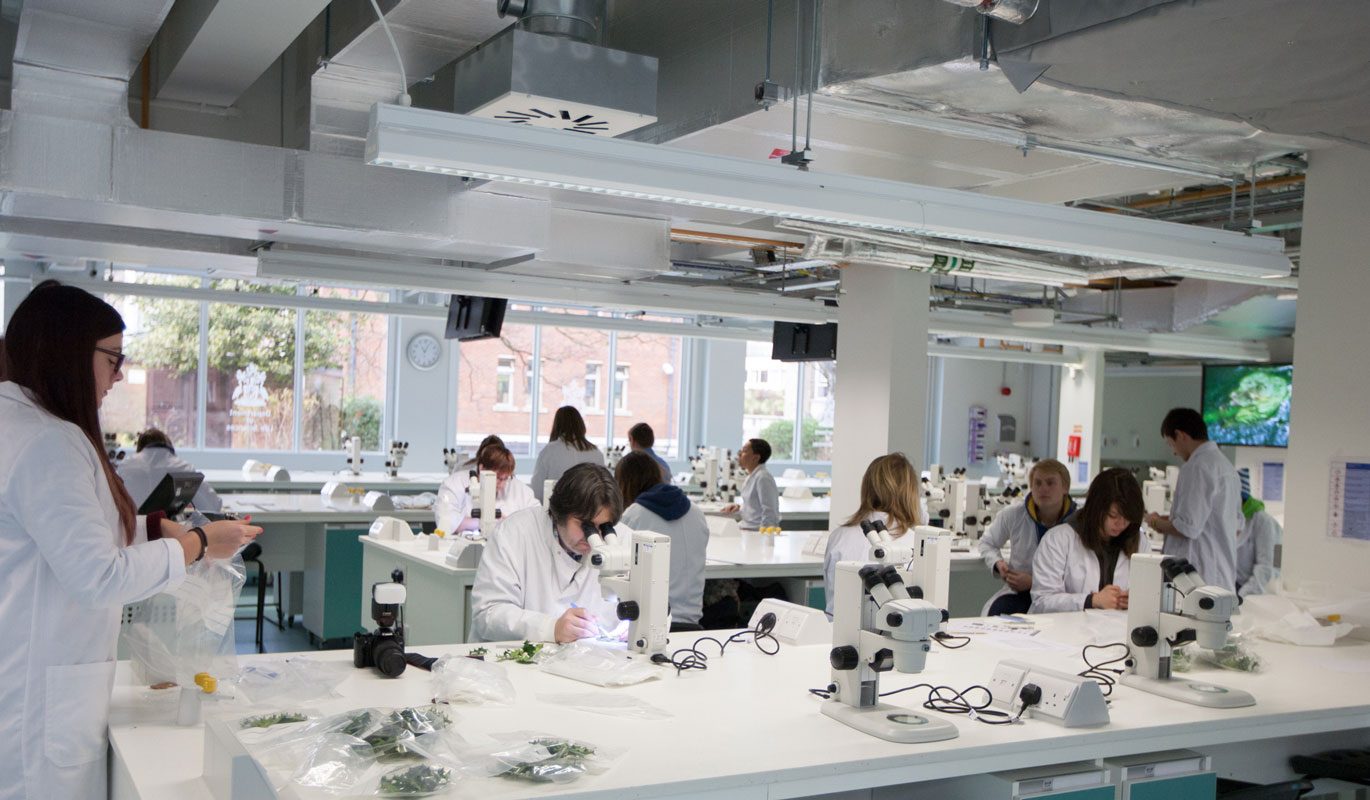
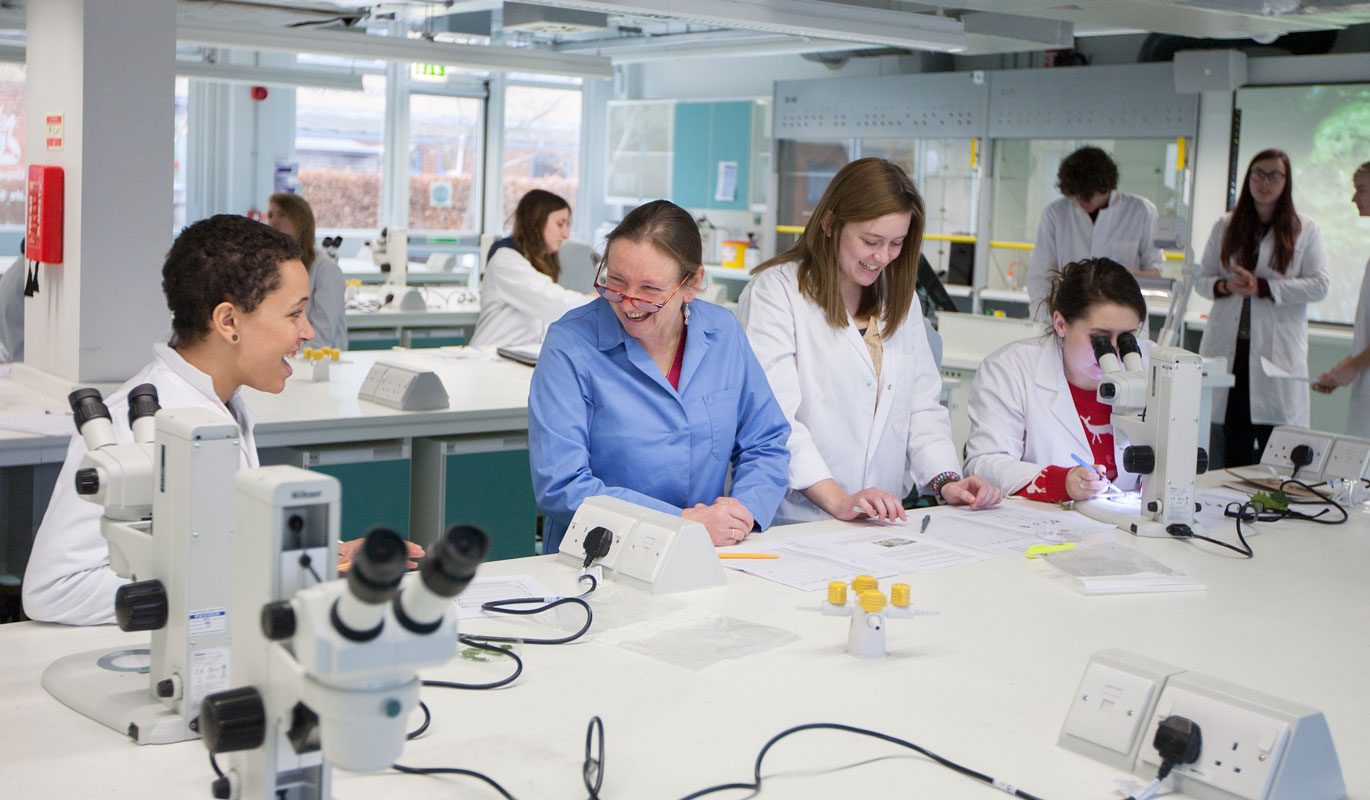
As with all high performance technical facilities people and material flows are critical to a complex function. This solution enables classes to be prepared and set up efficiently and for large numbers of students to easily engage.
It provides a high performance interactive technical space which is bright and functional. The project incorporates commercial technology including carousel storage systems to maximise the use of floor space, providing the largest, most flexible science teaching lab on the Cambridge campus.

University Life Sciences Senior Technical Officer, Kevin Bright said, “…the new lab has totally changed the way that we work, we have been able to successfully service all classes scheduled despite the cohorts (numbers) being double the size … We have been able to timetable back- to- back sessions in completely different subject areas with complex practicals requiring turnaround in less than 10 minutes.”